⚡ Quick Answer: Complete Section 6 with the buyer’s details, give them the V5C/2 slip (Section 10), and notify DVLA online the same day. Keep a signed car sale agreement as proof of the transaction.
When selling your car privately, one of the most common areas of confusion is the V5C logbook (also known as the registration certificate). This document proves who the registered keeper is, and it’s vital to handle it correctly during the sale to avoid fines, disputes, or problems with the DVLA.
However, the V5C only transfers keepership — not proof of payment or sale terms. That’s why many sellers also use a car sale agreement alongside the logbook for complete protection.
Let’s break down exactly what you need to do.
What Is the V5C Logbook?
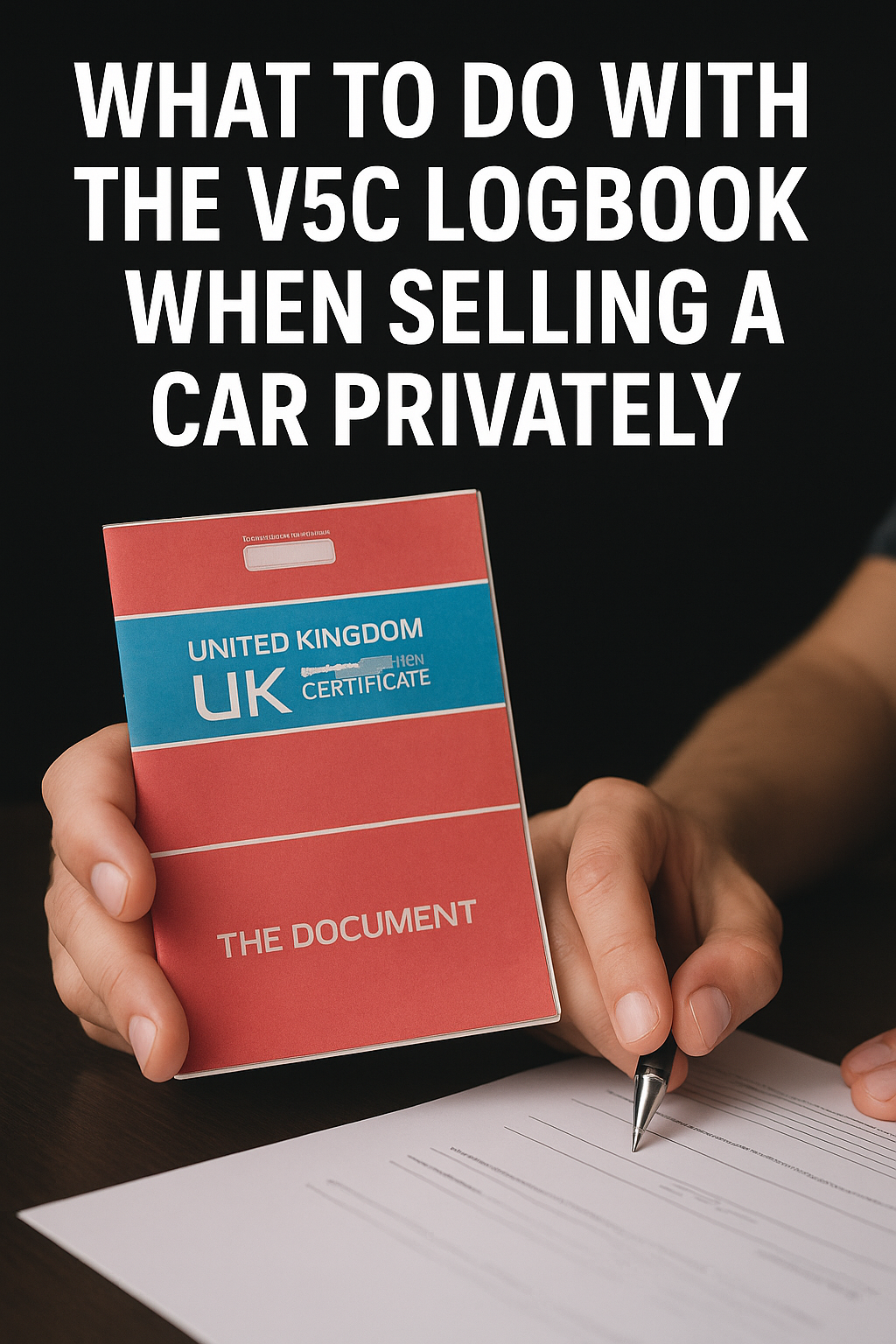
The V5C, issued by the DVLA, records details of the vehicle and its registered keeper. It is not proof of ownership — it’s proof of who is responsible for taxing, insuring, and registering the vehicle.
When you sell your car, you must update the DVLA records so they know you are no longer responsible for it.
Step 1: Fill Out the V5C Correctly
When selling privately, you should:
- Complete Section 6 (New Keeper Details) — Enter the buyer’s full name and address.
- Both parties sign Section 8 — This confirms the transfer of keepership.
- Give the buyer Section 10 (V5C/2 “new keeper slip”) — This is their temporary proof of keepership while waiting for the DVLA to issue a new logbook in their name.
Important: The buyer won’t receive their own V5C for 2-4 weeks. The V5C/2 slip is their only proof in the meantime.
Step 2: Notify the DVLA Immediately
You must inform the DVLA that you’ve sold the car. Do this on the same day as the sale:
- Online at GOV.UK/sold-bought-vehicle — Fastest method, confirmation is instant.
- By post — Send the completed V5C to DVLA, Swansea, SA99 1BA.
Once notified, you’ll receive written confirmation that you are no longer the registered keeper.
Step 3: Protect Yourself as the Seller
Failing to notify the DVLA promptly could leave you facing:
- Road tax reminders and penalties
- Parking fines or speeding tickets in your name
- Congestion charge notices
- Liability if the car is involved in an accident or crime
Until the DVLA updates their records, you remain legally responsible. This is why same-day notification is essential.
Step 4: Do You Still Need a Written Agreement?
Yes! The V5C records the transfer of keepership, but it doesn’t prove:
- How much was paid
- The payment method used
- The vehicle’s condition at sale
- What was agreed between buyer and seller
A proper car sale agreement protects you if:
- The buyer later disputes the price paid
- The buyer claims the car wasn’t “sold as seen”
- There’s a dispute about the vehicle’s mileage or condition
- You need to prove what was agreed at the time of sale
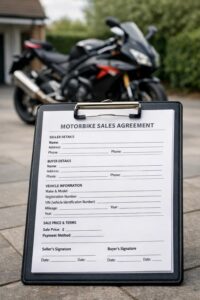
Your agreement should include: buyer and seller details, vehicle registration and VIN, sale price, payment method, mileage reading, condition disclosure, and both signatures.
Our Car Sale Agreement Template covers all of this in minutes — giving you documented proof of the sale terms for complete peace of mind.
What Buyers Should Check Before Purchasing
If you’re buying a car privately, protect yourself by checking:
- V5C details match the vehicle — Registration, VIN, colour, and make should all match what you’re buying.
- Seller’s name matches the V5C — If it doesn’t, ask why. Be cautious of “selling for a friend” situations.
- MOT history — Check free at GOV.UK/check-mot-history. Look for mileage discrepancies.
- Outstanding finance — Run an HPI check. Finance companies can repossess from innocent buyers.
- Vehicle tax status — Check at GOV.UK/check-vehicle-tax.
Insist on a signed agreement. A seller who refuses to put the deal in writing is a red flag. Our Car Sale Agreement protects both parties equally.
💡 Remember: The V5C transfers keepership. A Car Sale Agreement provides proof of the deal. You need both for complete protection. → Create Your Agreement
Seller’s Checklist: Before Handing Over the Keys
Use this checklist to make sure you’ve covered everything:
- ☐ Completed Section 6 of V5C with buyer’s details
- ☐ Both parties signed Section 8
- ☐ Given buyer the V5C/2 new keeper slip (Section 10)
- ☐ Received full payment (and waited for it to clear if by cheque)
- ☐ Both parties signed a car sale agreement
- ☐ Handed over MOT certificate, service history, and all keys
- ☐ Notified DVLA online (do this immediately!)
- ☐ Cancelled or transferred your insurance
Conclusion
When selling a car privately in the UK, handling the V5C correctly is just as important as receiving payment. By:
- Filling in the right V5C sections
- Giving the buyer their new keeper slip
- Notifying the DVLA on the same day
- Using a signed car sale agreement
…you protect yourself from disputes, fines, and financial risks after the sale.
Ready to sell your car with confidence? Our Car Sale Agreement Template takes just minutes to complete and covers everything both parties need — vehicle details, payment terms, condition disclosure, and seller declarations all in one document.
Frequently Asked Questions
What is the V5C logbook?
The V5C is the vehicle registration certificate issued by the DVLA. It records the registered keeper’s details but is not proof of ownership — it shows who is responsible for taxing and registering the vehicle.
Do I need a receipt when selling a car privately?
Yes. The V5C only transfers keepership, not proof of the sale terms. A written agreement or receipt proves the price paid, payment method, and vehicle condition — essential if disputes arise later.
How do I notify DVLA I’ve sold my car?
The fastest way is online at GOV.UK/sold-bought-vehicle. You can also post the completed V5C to DVLA, Swansea, SA99 1BA. Do this on the same day as the sale.
What happens if I don’t tell DVLA I’ve sold my car?
You remain the registered keeper until DVLA is notified. This means you could receive parking fines, speeding tickets, road tax demands, and even be held liable if the vehicle is involved in an accident or crime.
Can I sell a car without the V5C logbook?
Yes, but it’s more complicated. You’ll need to apply for a replacement V5C (which takes time) or complete a V62 form. Buyers are often suspicious of vehicles sold without a logbook, so expect more questions and potentially a lower price.
Last updated: January 2025
Disclaimer: This guide provides general information about selling a vehicle privately in the UK. It is not legal or financial advice. While we make every effort to keep this information accurate and up to date, DVLA procedures and requirements may change. Always check the latest guidance at GOV.UK before completing your sale.