Updated: January 2026 • Based on UK Law
Quick Navigation:
- What Is a Child Medical Consent Form?
- What Is the Age of Medical Consent in the UK?
- Can You Go to the Doctors Alone Under 16?
- What Age Can a Child Refuse Medical Treatment?
- Can Grandparents Take a Child to the Doctor?
- Can Parents Access Their Child’s Medical Records?
- What Are the Four Principles of Informed Consent?
- FAQs
What Is a Child Medical Consent Form?
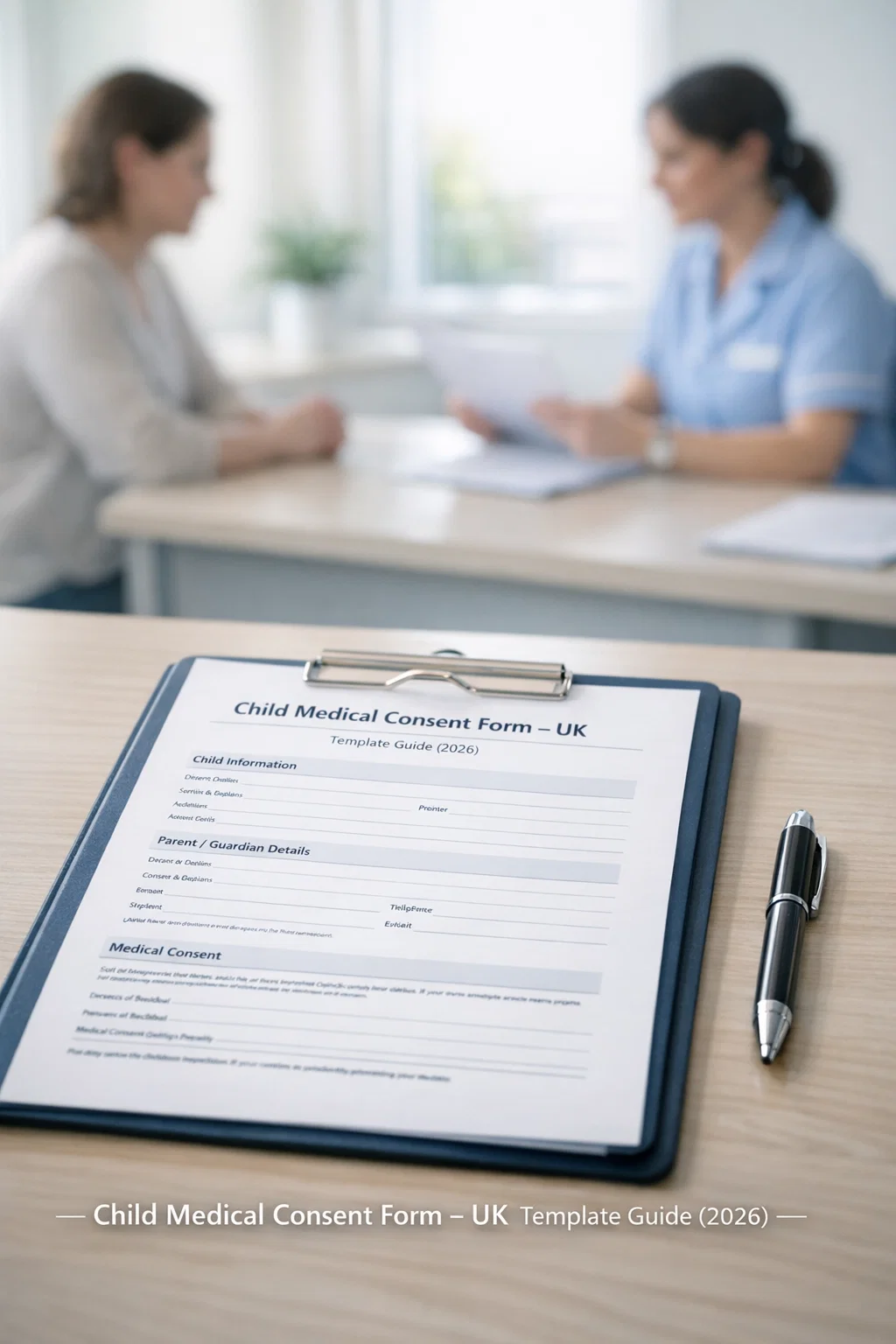
A child medical consent form is a document authorising another adult to consent to medical treatment for your child. It grants temporary decision-making authority when parents cannot be present. Under UK law, only those with parental responsibility can usually consent to a child’s medical treatment.
This guide covers UK consent rules, Gillick competence, age thresholds, and third-party authority. Free medical consent checklist included.
Medical emergencies don’t wait for parents to be available. Schools, grandparents, childminders, and other carers may need to take your child for medical treatment — but without proper authorisation, healthcare providers may refuse non-emergency care or face difficult decisions about proceeding.
This guide explains everything you need to know about medical consent for children in the UK — from the legal age thresholds to when grandparents can consent, and what happens if a child refuses treatment.
✓ Free Child Medical Consent Checklist
Interactive checklist covering consent requirements, Gillick competence, parental responsibility, and what to include in a medical consent form.
Prefer to get started now? Get the Child Medical Consent Form Template →
FREE Child Medical Consent Checklist
Essential Information Required Before Authorising Medical Treatment
What Is a Child Medical Consent Form?
A child medical consent form is a written document that authorises a named person to make medical decisions for your child when you cannot be present. It’s sometimes called a medical authorisation letter, healthcare proxy for minors, or temporary medical consent.
When You Need a Medical Consent Form
Common situations where a medical consent form is essential:
- School trips and residential visits: Teachers need authority to consent to treatment if a child is injured or falls ill
- Grandparents or relatives caring for children: Regular childcare arrangements where medical needs may arise
- Childminders and nannies: Professional carers who may need to take children for medical appointments
- Sports clubs and activity providers: Coaches may need to authorise emergency treatment
- Parents travelling abroad: When one parent is away and the other or a carer needs full authority
- Separated parents: When the non-resident parent has the child and medical issues arise
What a Medical Consent Form Should Include
A comprehensive child medical consent form typically covers:
- Child’s full name, date of birth, and NHS number
- Parent/guardian details and contact information
- Named authorised person(s) and their relationship to the child
- Scope of consent (routine treatment, emergency treatment, specific procedures)
- Known allergies, medical conditions, and current medications
- GP details and any specialist consultants
- Duration of authorisation
- Parent signature and date
Legal Status of Medical Consent Forms
In the UK, a medical consent form is not strictly required by law for emergency treatment — doctors can treat children in emergencies without parental consent under the doctrine of necessity. However, for non-emergency care, healthcare providers generally require consent from someone with parental responsibility.
A medical consent form provides evidence that the parent has delegated temporary authority, giving healthcare providers confidence to proceed with treatment.
What Is the Age of Medical Consent in the UK?
In England and Wales, the legal age of medical consent is 16. From age 16, a young person can consent to their own medical treatment without parental involvement, and their decision is treated the same as an adult’s consent.
The 16+ Rule
Under the Family Law Reform Act 1969, anyone aged 16 or over can consent to surgical, medical, or dental treatment. This includes:
- GP appointments and consultations
- Prescriptions and medications
- Surgical procedures
- Dental treatment
- Mental health treatment (with some exceptions)
- Contraception and sexual health services
Once a young person turns 16, healthcare providers do not need to seek parental consent, and parents have no automatic right to be informed about or involved in their child’s medical decisions.
Under 16: Gillick Competence
Children under 16 can also consent to medical treatment if they are deemed “Gillick competent.” This principle comes from the landmark case Gillick v West Norfolk and Wisbech Area Health Authority (1985).
A child is Gillick competent if they have sufficient understanding and intelligence to fully comprehend the proposed treatment, including its nature, purpose, and possible consequences.
There’s no set age for Gillick competence — it depends on the individual child and the complexity of the treatment. A 14-year-old might be competent to consent to a vaccination but not to major surgery.
Scotland and Northern Ireland
In Scotland, the Age of Legal Capacity (Scotland) Act 1991 similarly allows under-16s to consent if they understand the treatment. Northern Ireland follows common law principles similar to England and Wales.
Can You Go to the Doctors Alone Under 16 in the UK?
Yes — children under 16 can attend GP appointments alone and can consent to treatment themselves if they are Gillick competent. There is no legal requirement for a parent to be present at medical appointments.
What Happens at the Appointment
When an under-16 attends alone, the healthcare provider will:
- Assess whether the child understands the consultation and any proposed treatment
- Determine if they’re Gillick competent for the specific treatment being discussed
- Provide treatment if the child can consent, or contact parents if they cannot
- Consider the child’s best interests throughout
Confidentiality for Under-16s
Children who are Gillick competent are entitled to the same confidentiality as adults. This means:
- The GP cannot share information with parents without the child’s consent
- Medical records are confidential
- Parents cannot demand to know what was discussed
However, confidentiality can be broken if there are safeguarding concerns or the child is at risk of serious harm.
Practical Considerations
While legally possible, whether a child should attend alone depends on:
- The child’s maturity and confidence
- The nature of the appointment (routine vs complex)
- Whether the child can accurately describe symptoms and medical history
- Transportation and safety getting to/from the surgery
Many GPs encourage children approaching their teenage years to have part of appointments alone to build independence and allow them to discuss sensitive issues privately.
What Age Can a Child Refuse Medical Treatment?
This is where UK law becomes more complex. While children can consent to treatment from age 16 (or earlier if Gillick competent), their right to refuse treatment is more limited.
The Asymmetry of Consent and Refusal
Under UK case law, a competent child’s consent to treatment is legally valid, but their refusal can potentially be overridden by someone with parental responsibility or by the court.
Key cases establishing this principle:
- Re R (1991): Court held that a Gillick competent child’s refusal could be overridden by parents or the court
- Re W (1992): Confirmed that even a 16-17 year old’s refusal could be overridden if it was in their best interests
When Refusal Can Be Overridden
A child’s refusal is most likely to be overridden when:
- The treatment is life-saving or prevents serious harm
- The child’s mental state affects their decision-making capacity
- The refusal stems from temporary distress rather than informed decision
- The child is very young and the treatment is clearly beneficial
When Refusal Is More Likely to Be Respected
Courts and healthcare providers are more likely to respect a child’s refusal when:
- The child is mature and clearly understands the consequences
- The treatment is non-urgent or elective
- The refusal is consistent and considered
- The child is approaching 18
- Forcing treatment would cause significant psychological harm
Age 18: Full Autonomy
Once a person turns 18, they have full legal capacity to refuse any treatment, even life-saving treatment. Their refusal cannot be overridden (unless they lack mental capacity under the Mental Capacity Act 2005).
Can Grandparents Take a Child to the Doctor Without Consent?
Grandparents can take a child to medical appointments, but they cannot consent to treatment unless they have been given specific authorisation by someone with parental responsibility, or they have parental responsibility themselves.
Who Has Parental Responsibility?
Under the Children Act 1989, parental responsibility is held by:
- The mother (automatically)
- The father if married to the mother, or named on the birth certificate (post-December 2003), or by court order/formal agreement
- Anyone granted parental responsibility by court order
- Legal guardians appointed in a will or by the court
- Local authority if the child is in care
Grandparents do not automatically have parental responsibility, even if they provide regular childcare.
What Grandparents Can Do Without Formal Consent
In practice, grandparents can:
- Take a child to A&E in an emergency (treatment will proceed under necessity)
- Collect prescriptions already authorised by a GP
- Attend appointments as a companion (though they can’t consent)
- Provide medical history information to healthcare providers
What Grandparents Need Authorisation For
Without a medical consent form or parental responsibility, grandparents cannot:
- Consent to non-emergency medical treatment
- Make decisions about vaccinations or immunisations
- Consent to surgery or procedures
- Access the child’s medical records
- Make decisions about ongoing treatment
The Solution: Medical Consent Form
If grandparents regularly care for your child, providing them with a signed medical consent form allows them to:
- Consent to routine medical treatment
- Make emergency decisions if you can’t be contacted
- Communicate with healthcare providers with full authority
For more comprehensive arrangements, see our medical consent form.
Child Arrangements Pack
Complete Child Care Solution • 5 Templates + Editor & Interview Versions • Save 50% vs Buying Individually
Lifetime Access • Free Updates • 30-Day Money-Back Guarantee*
Can a Parent Access Their Child’s Medical Records?
Parents with parental responsibility can generally access their child’s medical records, but this right is not absolute — it depends on the child’s age and capacity, and the child’s own wishes.
Children Under Gillick Competence Age
For young children who are not Gillick competent:
- Parents can request access to medical records
- Healthcare providers will usually comply
- Access should be in the child’s best interests
Gillick Competent Children (Usually 12+)
Once a child is considered Gillick competent:
- The child can request confidentiality from their parents
- Healthcare providers should respect this request
- Parents cannot demand access if the child refuses
- The child can consent to or refuse disclosure
Children Aged 16-17
For 16-17 year olds:
- They have the same confidentiality rights as adults
- Parents have no automatic right to their records
- Access requires the young person’s consent
When Parental Access May Be Refused
Healthcare providers may refuse parental access if:
- The child is Gillick competent and refuses consent
- Disclosure would not be in the child’s best interests
- There are safeguarding concerns about the requesting parent
- The information relates to treatment the child consented to confidentially
Separated Parents
Both parents with parental responsibility have equal rights to access records, unless a court order restricts this. Being the non-resident parent doesn’t reduce these rights.
What Are the Four Principles of Informed Consent?
The four principles of medical ethics that underpin informed consent in the UK come from the work of Beauchamp and Childress. These principles apply to all medical treatment, including treatment of children.
1. Autonomy
Respect for the patient’s right to make their own decisions about their healthcare. For children, this means:
- Involving children in decisions appropriate to their understanding
- Respecting Gillick competent children’s decisions
- Not overriding children’s wishes without good reason
- Providing information in age-appropriate ways
2. Beneficence
Acting in the patient’s best interests and providing benefit. For children:
- Treatment should aim to help the child
- Benefits should outweigh risks
- Healthcare providers must consider what’s best for the child, not just what parents want
3. Non-maleficence
“First, do no harm.” This principle requires:
- Avoiding treatments that cause unnecessary harm
- Minimising side effects and risks
- Not proceeding with treatment that is against the child’s interests
4. Justice
Fair distribution of healthcare resources and treating patients equitably:
- All children should have equal access to treatment
- Decisions shouldn’t discriminate based on background
- Resources should be allocated fairly
How These Apply to Child Medical Consent
When a parent signs a medical consent form, healthcare providers still apply these principles:
- They must believe the treatment is in the child’s best interests (beneficence)
- They should involve the child in decisions where possible (autonomy)
- They must ensure the treatment won’t cause disproportionate harm (non-maleficence)
- They should treat the child fairly regardless of who is consenting (justice)
Frequently Asked Questions: Child Medical Consent UK
Can a medical consent form be used for vaccinations?
Yes, if you specifically include vaccination authority in the consent form. Many schools request separate vaccination consent forms, but a comprehensive medical consent form can cover routine immunisations if clearly stated.
How long does a medical consent form last?
You can specify the duration in the form. For ongoing arrangements (like grandparent childcare), forms are typically valid for 12 months. For specific events (school trips), they cover that period only. Review and renew annually.
Can I give medical consent over the phone in an emergency?
Yes. In emergencies, healthcare providers will attempt to contact parents for verbal consent. They’ll document the conversation. However, if parents can’t be reached, doctors can treat under the doctrine of necessity without any consent.
What if parents disagree about medical treatment?
Either parent with parental responsibility can consent to treatment — the consent of one is legally sufficient. However, for major or controversial decisions (e.g., circumcision, certain vaccinations), healthcare providers may seek both parents’ agreement or court guidance.
Can a childminder consent to medical treatment?
Only if you’ve provided them with a signed medical consent form. Registered childminders should request these as part of their standard paperwork. Without written authorisation, they can only consent to emergency treatment under necessity.
Does a medical consent form cover dental treatment?
Yes, if dental treatment is included in the scope. You can authorise routine dental care, emergency dental treatment, or specific procedures. Be clear about what’s covered, especially for treatments like extractions or orthodontics.
Can my ex-partner take our child to the doctor without telling me?
Yes. Both parents with parental responsibility can independently consent to medical treatment. There’s no legal requirement to inform or consult the other parent for routine appointments, though good co-parenting practice suggests communication about health matters.
What if my child has a medical emergency abroad?
UK medical consent forms may not be recognised in other countries. If your child is travelling abroad with someone else, check the destination country’s requirements. Some countries require notarised or apostilled consent documents.
Can I refuse all medical treatment for my child?
Parents cannot refuse treatment that is clearly in the child’s best interests or necessary to save their life. Courts can override parental refusal and authorise treatment. Refusal of non-essential treatment is generally respected, but healthcare providers must consider the child’s welfare.
Do I need a medical consent form for NHS 111 calls?
Anyone can call NHS 111 on behalf of a child and receive advice. For any treatment or prescriptions that result from the call, normal consent rules apply — the person collecting prescriptions or attending appointments needs appropriate authorisation.
Summary: Child Medical Consent in the UK
Understanding medical consent for children helps protect your child when you can’t be present and ensures healthcare providers can act confidently. The key points: the legal age of medical consent is 16, but under-16s can consent if Gillick competent. Children’s right to refuse treatment is more limited than their right to consent. Grandparents and other carers need written authorisation to consent to non-emergency treatment.
A properly drafted medical consent form gives peace of mind to parents, carers, and healthcare providers alike. It ensures your child can receive timely treatment, documents your wishes clearly, and provides the authority carers need to act in your child’s best interests.
Your next step: If grandparents, childminders, or other carers regularly look after your child, a medical consent form is essential protection.
Get the Child Medical Consent Form Template →
The Truth About “Free” Legal Template Sites (What You’re Really Signing Up For)
Most websites offering a “free legal template” follow the same pattern:
- You click because it’s advertised as free
- You spend 10–15 minutes answering questions
- At the very end, you must create an account or start a “free trial”
- Your card is required upfront
- The subscription auto-renews at £29–£39 per month
This isn’t a free template — it’s a subscription funnel. Many people only realise after being charged £300–£400 over the year.
Why These “Free” Templates Are a Legal Risk
- Outdated wording: not aligned with current UK law
- Missing mandatory clauses: required for legal validity
- No compliance guidance: leaving users without legal context
- No structured checklist: no way to verify the document works
- Not kept updated: often unchanged when legislation changes
One incorrect clause can weaken or invalidate the entire document.
Hidden Problem: Many “Free Template” Sites Aren’t Even UK-Based
Another major issue is that many free or auto-subscription template sites operate outside the UK and use documents originally drafted for the US legal system. These are then loosely adapted for “international use,” which creates serious problems:
- Incorrect terminology: taken from US contract law
- Missing UK statutory references: essential legal requirements omitted
- Non-applicable clauses: terms that don’t apply under UK legislation
- Legal conflicts: risks breaching UK consumer, employment, or GDPR rules
Why Templates UK Does the Opposite
- Drafted by UK professionals: written by experienced business & legal experts
- UK-law only: no US crossover or generic “international” templates
- £10 one-time price: no subscriptions, no renewals
- Full preview: see the exact document before buying
- Lifetime access: free lifetime updates included
No tricks. No trials. No hidden fees. Just the exact UK-specific legal document you came for — at the price we told you upfront.
Get the professionally drafted Child Medical Consent Form Template — UK-law only, instant download, no subscriptions.
Explore All Templates UK Pillar Guides
- UK Business Legal Templates – Complete Guide (37 Templates)
- Residential Property & Landlord Legal Guide UK
- Family Law Documents Guide UK
- Wills & Estate Planning Guide UK
- Employment Documents Guide UK
- How to Set Up a Business in the UK – Legal Guide
- Website Legal Documents UK – Compliance Guide
- Financial & Commercial Contracts UK – Protection Guide
- Commercial Office Lease Guide UK
- Digital & IP Agreements Guide UK
Get Every Template We Make
The UK Legal Templates Ultimate Bundle includes all 91 templates across every category:
- Business & Commercial (37) — Employment, HR, contracts, agreements, compliance, and formation docs
- Landlord & Property (28) — ASTs, evictions, Section 8/21, correspondence, inventory, and management
- Family & Relationships (18) — Prenups, cohabitation, divorce, child arrangements, name changes, and more
- Wills & Estate (8) — Wills, mirror wills, trusts, advance care planning, and estate documents
One purchase. Every template. Free lifetime updates — including all future law changes.
Related Guides
- Travel Consent Letter Guide UK
- Parental Responsibility Agreement (CPRA) – Free Step-by-Step Guide
- Child Arrangement Agreement Guide UK
- Parenting Plan Guide UK
Free Legal Templates & Interactive Checklists
Access all our free UK legal templates, checklists and downloadable PDFs.
Last updated: January 2026
Disclaimer: This guide provides general UK legal information, not legal advice. Laws are current as of January 2026.